Welcome to Blogs/Guest Blogs
This page contains my own personal blogs as well as being dedicated to all guests of
PinkstersAwareness,
Personal blogs from Pinkster are currently being uploaded on a varied timescale at present,
so please keep checking back for updates.
Guest blogs will be uploaded once every week on a Wednesday.
All content on this page is shared with the permission of the Guest bloggers.
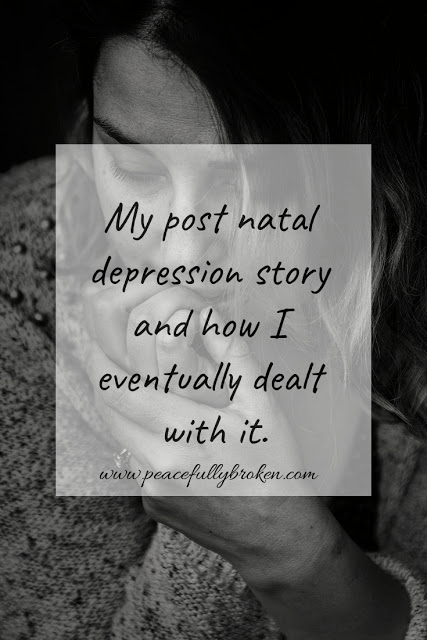
I wanted to share this post today to reveal how much I struggled to cope after giving birth and how completely overwhelmed and anxious I was.
I honestly think more should be said about postnatal depression because what’s supposed to be an extremely happy and exciting time can quickly turn into sadness, guilt, anxiety, and negativity. The effect it has on the emotional and mental health of new mothers is very upsetting. It’s one of the worst possible feelings, attempting to bond with your baby and each time you look at them you struggle to contain your tears or feel an immense amount of guilt. Plus trying to remain positive when you have a screaming baby with you 24/7 is very hard to do, and we can put huge amounts of pressure on ourselves trying to be perfect.
When I found out I was pregnant, It came as a bit of a shock because I also suffer PCOS and my doctor warned me that it could be difficult to conceive, So it took us six years to finally get pregnant and I was ecstatic I always wanted a child and I felt so blessed that we were going to have one.
Pregnancy had its downsides though, I was very sick to the point where I couldn’t keep any food down, I couldn’t drink anything but water, and no matter how much sleep I got I was tired all the time. Over the course of the months, I developed gestational diabetes which resulted in me having to be induced because my blood sugar was way too high. Giving birth was okay, although I had to be put on a drip to speed up my contractions which were slightly horrendous and painful. I screamed for an epidural in the end, and that was that he was born at 5.10 in the morning and the first time I held him was magical I fell in love instantly and cried so much which were, of course, happy tears.
After spending two nights in the hospital we were finally allowed home, and then it started, I struggled to feed him because no matter how much I tried he would not latch on properly, meaning I had to formula feed and this was one of the first things I felt guilty about I remember thinking what sort of mother can’t feed her own baby. My partner had to return to work, so I was up each night trying my best to calm him, however, there were occasions where I became so overwhelmed I had to wake my partner up because I couldn’t handle it I would pass him over and run to a spare room and start sobbing what made this worse was he’d stop crying once my partner comforted him. I remember thinking there was something wrong with me, what if he didn’t like me, and why couldn’t I comfort him, I felt like the worst mother ever. My partner would tell me its because he could sense how stressed and worried I was and that babies can pick up on it, so I needed to try to relax and keep calm.
Because of this I hated being alone with my baby I’d panic that I wouldn’t be able to settle him, but I had no other choice I had to try my best. I was extremely tired, the bags under my eyes were a kind of yellow, black colour I looked like death, my hair was greasy, and I hadn’t showered in days. There was one day I decided to take him to the doctors because he would not stop screaming and it was horrendous. Walking into that waiting room with dozens of disapproving looks made me so anxious I was rocking him, trying to feed him, walking up and down the room because he hated it when I sat down but nothing worked. I remember thinking that I couldn’t do it anymore, he hates me and is never going to stop screaming. What annoys me the most is when a baby is screaming, people looking over with that annoyed looks on their faces and wondering why you can’t calm your baby, there’s just no need for that the parents are already stressing out there’s no reason to make them feel any worse. Anyway, the doctor asked what milk we were giving him and decided it was best to change brands, and that honestly worked wonders, he became so much calmer and content and that in itself made me feel guilty because he could have been suffering in pain and I didn’t even no but fortunately all was good.
After the crying stopped and he became relaxed I felt like I could calm him down by myself and enjoy the precious days we had while he was still small. All of a sudden I started crying every day and one evening I sat in the bath and heard my partner making our baby laugh I smiled before sobbing uncontrollably and all these thoughts bounced around in my head making me believe I was a terrible mum, one because he wouldn’t laugh with me no matter how much I tried, and two I was continually on edge I could never relax around him because I was trying my best to keep him safe.
Along came the intrusive thoughts, which I now know are completely normal but they were terrifying. I felt distressed when I noticed mothers and their babies laughing and having loads of fun, and I would feel that sadness start to take over like I was going to break down right then and there why couldn’t I be like that. I googled every symptom I felt and truly believed I was going crazy, especially when I saw some pretty scary stuff if you do a quick google search about postnatal depression you should be able to see what I mean. My appetite decreased, and I was practically living on junk food because I had no energy to cook. I was just exhausted, irritable and sad all the time.
It’s true that you find out exactly who your friends are when you’ve had a baby, I only had a small circle of friends but guess what I didn’t hear a word from them for months no phone call, no texts, visits, nothing. When we did finally speak, not at one point did they ask how I was feeling, It was all about them, so I gave up out of anger and dealt with this on my own. What bothered me was I needed a friend, somebody who I could open up too. After a few disagreements, I revealed how alone I actually was, but they didn’t seem to care, they had the nerve to say I should have got in touch with them well I’m sorry, but friendships work both ways it is in no way one-sided. So I was completely alone, even though I had family around me I couldn’t bring myself to open up to them I felt embarrassed and didn’t want it to seem like I wasn’t coping.
So, I managed to keep this hidden from everyone and it made me feel a million times worse. One evening, after our baby was asleep me and my partner decided to watch a funny movie but when I was supposed to be laughing I was crying, and I couldn’t stop. I broke down and told him everything he tried to comfort me and urged me to go and speak to someone for help. Well, that just made me angry I remember saying I’m not bloody crazy, I’m fine, I’m just tired and a little emotional. He apologised and advised me to tell them how I was feeling as I could be suffering postnatal depression. I hesitantly agreed and booked an appointment for the next day.
My doctor was kind and very patient she literally just sat and listened. I poured out my feelings, and she asked me why I didn’t visit her sooner I told her I was too afraid in case she thought I wasn’t capable of looking after my baby. However, she put my mind at rest and assured me that postnatal depression is pretty common and it in no way means I’m incapable or a bad mother. I was prescribed citalopram, and after a few weeks I was no longer crying, no longer feeling guilty and able to breathe. It took a while until I felt like myself again and they were times when I would have one of those upsetting days where I felt like everyone was against me which made me feel very isolated. Eventually, I began to find different ways to relax and was able to stop the tablets through doctors orders. I was now enjoying life each day free from feeling depressed, my anxiety was and still is there but I try to manage that in several different ways.
If you are feeling this way and unsure if its postnatal depression or not then these signs below will hopefully help you out.
No confidence
Feeling extremely guilty
Lots of negative/intrusive thoughts
Feeling hopeless
Tearful
Finding it difficult to sleep
Feeling incapable of looking after your baby
Finding it really difficult to bond with your baby
Thinking about suicide
Lack of interest in anything
Loss of appetite
Anxiety or panic attacks
Feeling irritable
Crying excessively
Don’t sit and suffer as I did, speak to family and friends whoever is around that your trust and can open up too, and go and see a doctor I appreciate how scary it is, because you may feel like they are judging you and think your unable to cope, but they don’t they listen and help. So get some help, and you’ll start to feel better and be able to enjoy all the precious moments with your baby while they’re still small because It passes by so quickly, before you no it there starting school and acting like little teenagers with serious attitude I speak from experience!!
I hope this can help some of you I’m always here if you ever need a chat. feel free to share, comment and don’t forget to subscribe to my blog for post updates and my monthly newsletter. xx
Jo
Copy Right (C) MissJoblogger (Twitter)
Having been diagnosed with Autism at 13 and depression at 15 years of age, both have played a considerable part of my life and my mental health for the last seven and five years respectively. The motive for writing a blog on this subject came from watching a documentary about the experiences of people with autism and how it affects their life. This got me thinking about my own experiences of autism and how it co exists with my depression and in which ways hey manifest in my daily life. In this blog I want to best describe my own experiences of the two and possibly debunk some of the myths about these. Like depression makes me an unhappy person or having autism means I can’t have relationships and friendships with neuro typical people. Neither of these are true, both have significance influence on how I live my life.
Furthermore, I feel there are many misconceptions about both these issues. Having watched the documentary about autism I thought long after about the narrow view of autism it portrayed and how if I told people I was autistic, if this was their only explanation of autism, how incorrectly they would view it’s affects on me. For those who don’t already know, autism is a very large spectrum and there is no one thing that all autism people have or a certain ‘type’ of autistic people. Being mildly autistic many people I meet and indeed know are unaware that I have autism because like the majority of mental or behavioural disorders it does not always manifest itself in a public way. I do not walk around with any physical sign that I have autism or depression, however both are considerable factors to my mental health and to how I live on a day to day basis.
Calling it a disorder also for many may be questionable form of language. The last thing I want from people reading this blog is to think I in anyway view my autism as something negative or that I resent having it. Autism is intertwined with who I am. All of my behaviour is determined by who I am as a person, connected to that is my autism. One key part of this is my interest in democratic elections and political data analysis. It is undeniable that my fascination with this has been driven largely by my autism. In fact, as a politics university student I am currently carving out a career working within this. So ultimately, my autism is providing me with my ability to pursue my current career. Therefore, looking back over the last 7 years I can safely say there is nothing I resent or regret about my autism and for those reading this article who have autism, this shouldn’t be something which you’re ashamed of or something which should hold you back.
One of the most difficult aspects of my mental health journey has been learning listen to live with depression. During my GCSE’s I became very depressed and life became very difficult before being put on anti depressions. However positive I view my autism, it is undeniable that at times it can be overwhelming and a struggle. Social situations, knowing how to react in difficult situations and increased pressure can all be far more of a struggle for myself than neuro typical people. It was this that got me thinking about how my autism and depression interact with each other as it were. The ages of 15 on wards can be very difficult emotionally for teenagers and I don’t believe there is enough understanding or support for this. It is at this age you are undertaking your first real exams, looking at getting for your first job, looking at a level or college options and effectively planning the next stage of your life and determining which direction your life is going. For a ‘normal’ person this would be difficult. But for someone who has autism and already has struggles because of this, this stage I your life is incredibly difficult. It is this stage of my life I was diagnosed with depression and have been medicated with daily fluoxetine tablets since.
Living with both autism and depression can be rather difficult. On one level, the autism causes me to often have feelings of being overwhelmed or increased anxiety, on the other the depression seems to be an end product of this. Feelings of fatigue and just feeling defeated after these feelings have come. My purpose of writing these blogs have been to detail for me, how living with autism and depression has been for me and the ups and downs of this. Opening up about mental health is something no one should be ashamed of. Our mental health is what makes us who we are and should be dealt with the same as physical health not seen as something which is taboo to talk about or something which is stigmatised. The greatest things that have happened in regards to my autism and my depression is my diagnosis of them. The diagnosis of my autism allowed me to look further into what it was and develop a greater understanding into how it effects my life. My diagnosis of depression allowed me to medicate myself and has since I have been able to have a deeper level of control over this. It’s ok to not be ok and if any of this blog has resonated with you I urge you to seek help, it will help you so much.
Copy Right (C) realChrisMDoyle (X)

Up and Down Helper’s Hill – A short mental health related story for children.
I personally believe that as times have moved on and technology has developed, the art of reading, writing and story telling is beginning to fade. Technology is certainly advantageous to us all, however the foundations we lay in childhood are gradually withering away, which is a tragedy. We should all be able to read and write, and we should all enjoy it. It is the cornerstone of our’s and our children’s creativity and is the most useful teaching tool of all.
Furthermore, mental health is an unjustifiably taboo topic and for some reason, people still shy away from it, or are nasty to those who suffer under its unending pressures and are left debilitated by its heavy hand. Therefore, as it is #nationalstorytelling week, and there is this vast lack of reading and writing in society these days, alongside such terrible stigma and trauma around mental health, why not combine them all. Educate, inspire and be creative.
Thus, below is a story aimed at children, called “Up and Down Helper’s Hill.” Here, a child named Lorna embarks on a journey with her family where she meets a variety of people along the way. Each of them suffer various mental health issues, ranging from depression through grief, anxiety, depression and PTSD and a couple of teenagers who have an eating disorder and body dysmorphic disorder. It aims to show, in a child-like manner that the small things in life make the biggest difference to help those suffering. The little things like polite manners, conversation, spending time with someone and being generally kind and thoughtful; showing compassion makes life brighter for those people.
It also aims to convey that not only can you be kind to others, but it is acceptable to feel upset and share your feelings. It should be a good thing to talk openly and ask for help, and accept help. Not hide behind the mask of the trauma, ignore it or make hurtful comments.
For more information and future updates, feel free to drop me an email at lia.mhawareness@gmail.com and follow the site fightofyourlife.home.blog for all posts, re-posts and updates.
I hope you are having a joyful Saturday afternoon, with all my love and best wishes,
Lia xx ❤
Copy Right (C) Lia54755672 (X)
A LIFE AROUND AUTISM: THE INVISIBLE CONDITION
An account of a child’s experiences growing up with Autistic Spectrum Disorder.
Our daughter was born in 2006 into a loving family home. There wasn’t anything immediately wrong with her, not physically at least.
By the age of eight, something clearly wasn’t right with our daughter. Her tantrums by then were legendary. She was quickly labelled as a trouble-maker in class and could not stay calm in noisy situations. (Classrooms and supermarkets being top of the list.)
By the age of ten and after many years with what was previously known as CAMHS (Child & Adolescent Mental Health Services) we were wheel-spinning in a system starved of funding; getting absolutely nowhere. No diagnosis, worsening behaviour in social situations and her mainstream primary school threatening to suspend or exclude her. Stress levels at home were astronomical.
Just before turning eleven she was diagnosed as having Asperger’s Syndrome, a high-functioning aspect of Autistic Spectrum Disorder. Despite knowing this, her teachers would make off the cuff remarks such as “Well if you don’t like the noise in Assembly then just stick some earphones in!”, “You’re using Autism as an excuse to misbehave” and “You shouldn’t be here, we can’t cope with you.”
Eventually and after several suspensions, she was thrown into a Special Educational Needs school for a short time where she learned how to mimic self-harming techniques. The school was claustrophobic and terrifying for her. That’s when she started self-harming. She rarely talks about that place.
By the age of twelve she became so depressed and frustrated for being different to her peers that she attempted suicide. Our beautiful, intelligent and witty girl was now a shell of her former self; confused, scared, convinced she was worthless and unable to see her true ability.
The mental healthcare and mainstream educational system had left its mark. Thankfully, she is now getting the treatment she needs now that the worst outcome almost happened.
Let’s take a breather at this point. For those of you who can’t relate to her condition, our daughter cannot process conversations as quickly as ‘neurotypical’ children. She becomes quickly overloaded with the stimulation of being in noisy environments.
Imagine the scene in the recent Superman movie ‘Man of Steel’ when his X-ray vision and hypersensitive hearing are happening all at once, and his mother tries to help him control his abilities. The over-thinking, taking-everything-literally and need to have time alone to process interactions are all part and parcel of our daughter’s everyday life.
Failure to provide her with a calm and structured environment results in colossal meltdowns and impulsive actions – included but not limited to dashing across busy roads for example.
As parents, we have had to fight tooth and nail for our daughter to be placed in the right school. She is now in a good place, but sadly the experiences of the last four years have taken their toll. Her eventual placement into a supportive secondary school for autistic children came at a heavy price.
Many couples’ marriages (and sanity) do not survive the ordeal of trying to support their autistic child. I can only imagine the strain of a single-parent trying to do so. The impact on the mental health of the entire family unit is severe with both my wife and myself needing a protracted break from work over recent years for obvious reasons.
Had our daughter (and the rest of us) been appropriately supported in recent years then she would most likely not be suffering from depression, chronic anxiety and OCD (Obsessive Compulsive Disorder) at the age of twelve.
As a proud father, it is my life mission to raise awareness of Autistic Spectrum Disorder and campaign for children to have the right to an early diagnosis.
Even after the point of diagnosis, parents then enter the waiting game of drafting up an Educational & Health Care Plan (EHCP) and fighting to get their child into appropriate educational provision.
Sometimes I hear parents bemoaning the fact they have to drive their child(ren) to various social activities or clubs at weekends. But I don’t feel jealous. I feel blessed. To fight for the rights of a child who cannot verbalise their emotions and feelings makes you into a warrior.
Remarks such as “She doesn’t look autistic” just wash over me now. It is why many call Autism the invisible condition. How can they begin to understand?
Our daughter has us fighting her corner. Everyone is different, but also unique in their own way.
Copy Right (C) sjpdevine (X)
The Butterfly Effect
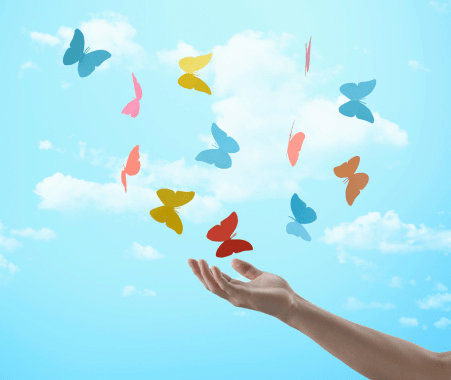
I was going to write this week about a group I attend called Papillon Art, papillon being french for butterfly. However I have recently been thinking that butterflies are everywhere for me at the moment even in mid winter. The images keep cropping up all over for me from stickers and song lyrics to chocolates and cake moulds. So I started to think the butterfly was some kind of spirit animal but I do think something was trying to tell me something so I have applied it as a metaphor to my relationship with anxiety.
I was at first the caterpillar plodding along not necessarily ugly but certainly unremarkable, I started to have dreams and ambitions, but I couldn’t attain these thing because of my anxiety. If you imagine the dreams would form around me as images like flickering flat screen televisions and the anxiety would become a glue holding the images together forming a cocoon. Gradually over time I was locked in and couldn’t progress. In this state I thought I was destroying myself but I was waiting for the right moment and changing.
My anxiety has weakened over time, the dreams are loosening and floating away on a breeze of relief, and because I have changed I am now in a position to chase them. I have become more confident and I am sure this happens for everybody so if I could give you one piece of advice it’s keep your dreams.
Fluttering over the sky under the shining sun, attending the flowers in magnificence to bathe beautifully in all radiance.
Copy Right (C) simoncrcook (X)
Self-harm and suicide must no longer be a secret shame
– It’s time to make the breaking silence easy
I’m not going to hold back or dilute this. Like so many, I’m writing about this to reach out to people. And If I even help one person, that is enough. Every person is special, every life valuable.
It sounds utopian doesn’t it? But the reality is for many years I was walking around feeling like an oxygen thief. Feeling undeserving of friends, family and life. Feeling totally isolated and detached, even in a room of my closest friends. And during my darkest times, drinking heavily… On my own.
I’ve lived with having no self-esteem and self-worth for as long as I can remember. The breakdown of my first marriage only reinforced the feelings of ineptitude and failure.
I tried to take my own life the night before we separated. Selfish – my now ex-wife would have not deserved to find me, no matter how dysfunctional our relationship was. Somehow my pills and neat vodka overdose failed, and my body rejected the lot. It wasn’t messy, so the house was okay when I left it. As I stumbled away from the house in the dark, all I could think was ‘What a failure, couldn’t even do that right.’
How we die profoundly impacts the people we leave behind. I wish I’d had such clarity of thought back then.
I went straight home to my parents and carried on like nothing had happened. I was all but sober, so able to pull it off. The world class liar in me coming to my rescue. I only wish that there and then I’d felt able to talk to my family and close friends. But it was never going to happen. The word ‘suicide’ still petrifies people, makes people turn the other way, or look at their shoes. Back then it was brushed under the biggest and bumpiest of carpets – avoided at all costs.
There’s was worry…
There’s still stigma…
But this attitude must change, so we can improve well-being in society; and save and enhance lives. I hate statistics. People are immeasurably more than a number. There is a story behind every single one, and a distraught family living with grief and never-ending guilt. And tending graves.
This is why we must fight to change perceptions and banish stigma for good.
Since then I’ve not tried again, but have often been flooded with suicidal thoughts, and the desire to self-harm. Which I acted on for some weeks. And again, I hid it – damaging myself in areas covered by t-shirt and shorts. Doing it while no-body was around. In the same way an alcoholic hides their drinking, and pain, from the world.
My self-harming was a direct bi-product of my struggle with post-natal depression. And although I was in therapy, I make the mistake of trying to remain at work. I put on a brave face, but for weeks, emotionally, I was running on empty. A soulless shell. A shit husband and father- that’s not harsh, or melodramatic. It’s the absolute truth.
This is another taboo subject, especially for men. I was so scared of the uncontrollable and manic thoughts I was having. It’s the scariest thing I’ve ever experienced, even more than the minutes before I thought I was ending my life. And honestly, I found this even harder to talk about that self-harm or suicide. The shame I felt was the most pain I have ever experienced; and is still with me; festering away at the back of my mind. I felt like the scum of the earth.
Not only because of the mania and thoughts, but how much I was hurting my current wife. Who has stood by me through everything, even when she’s struggled to process everything and stay strong because I couldn’t… Partners and close friends are unsung heroes, wonderful people who we must value and cherish… Truly remarkable people…
Support must become stronger than stigma.
We must do whatever it takes to create a society where there is no need for people to be shocked or uncomfortable. Ten years ago, I would have never been able to write, this. And even though it’s still painful, I know there’s more empathy and understanding today. More people are becoming braver, wanting to share experiences and help to save people. And I find it inspiring – there are so many people who are living with daily challenges far worse than me, showing what we can achieve.
I look back now, and know I was one of the lucky ones. And although I still have challenges and living with many conditions, I have so much to live for. Even though I can’t accept compliments or praise, and still often feel I don’t deserve my wife and children. I try and remember that people love and value me, and just want me to be comfortable in myself, and enjoy life as much as I can.
When we’re in the grips of mental illness we lose all perspective. But that is exactly what we must try and hold on to. Everyone can tell us how proud of us they are, how amazing and how brave we are. But only we can believe it. And if we don’t, and are struggling, we must try and summon the courage to confide in someone close to us. People loves us. People will listen, people will empathise, people will support us… If they know how we really feel.
We’re worth so much more that we give ourselves credit for. And it’s time to take it.
It’s time to talk… Talking changes lives.
Much love and respect,
Stephen x
Copy Right (C) Stephen Gillatt
Author of ‘Mad,sad,dysfunctional dad’
We’ve all ghosted someone.
She makes me feel miserable, I’ll just give her a swerve. He makes me feel uncomfortable, I’ll stop answering his messages. She was mean to my friend, I’m not talking to her anymore.
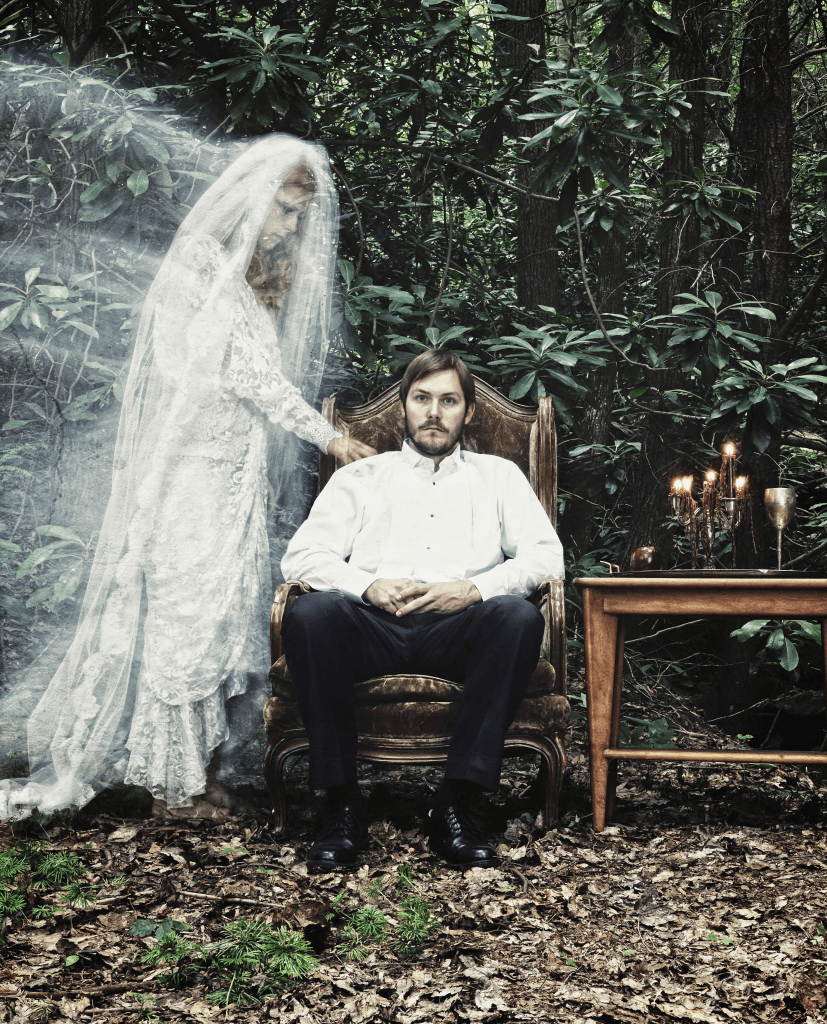
When mental health issues are involved, your own well being comes first, as it should. However, ghosting someone can have long term detrimental effects on the person involved, where an explanation of why we feel like we do may not. This doesn’t need to be face to face, often that’s too raw for all concerned. And with certain people, with narcissistic tendencies, its not ideal to get into a conversation – it’s giving them a way back in. But a one-time explanation of our feelings, as well as being cathartic, can save a lot of pain.
In 2018 I suffered a severe and long lasting bout of depression, which medication is only now getting the better of. I was ghosted by the two people I thought of as my best friends at the time, people who I had shared everything with, and vice versa. I had thought things were normal, going great, then suddenly, they weren’t. And although the gap created was painful, it was the lack of reason for it which preyed on me.
What had I done ? Or not done ? Surely if I’d said something I’d remember ? I went into a spiral of depression, took to my bed, became anxious and anti-social, was started on various medications. I was lucky to some extent – I had my wife to help, but the rest of my support network had not only gone missing, it had caused my breakdown. I never found out why I was suddenly ‘the enemy’, then or later.
Friendships end all the time. We might not like it, but that’s life. People move on, or grow apart. But ghosting, a social media reaction that has escaped into the real world, can do so much harm. Most of us probably have a person we have treated that way, if we are honest. It seems easiest. There’s no confrontation, and no extra time spent with a person making us miserable, or angry, or sad, or vulnerable.
But my experiences have shown me that if my friends had plucked up the courage to tell me why I was no longer needed, I would not have had the year I had. Truth and honesty are the cornerstones of a good relationship – they shouldn’t be abandoned in bad times. The ‘thank you, next’ culture is not always compatible with kindness and decency – what works on twitter may not work in real life.
I’m not in any way a medical professional, far from it. My experiences may or may not be unique, my answers my not work for you. By no means do I mean for you to keep people that have hurt you in your life. Jettison them. Absolutely. No question. Just make an effort to explain why.
Copy Right (C) James Cassie
(X) shortissweet
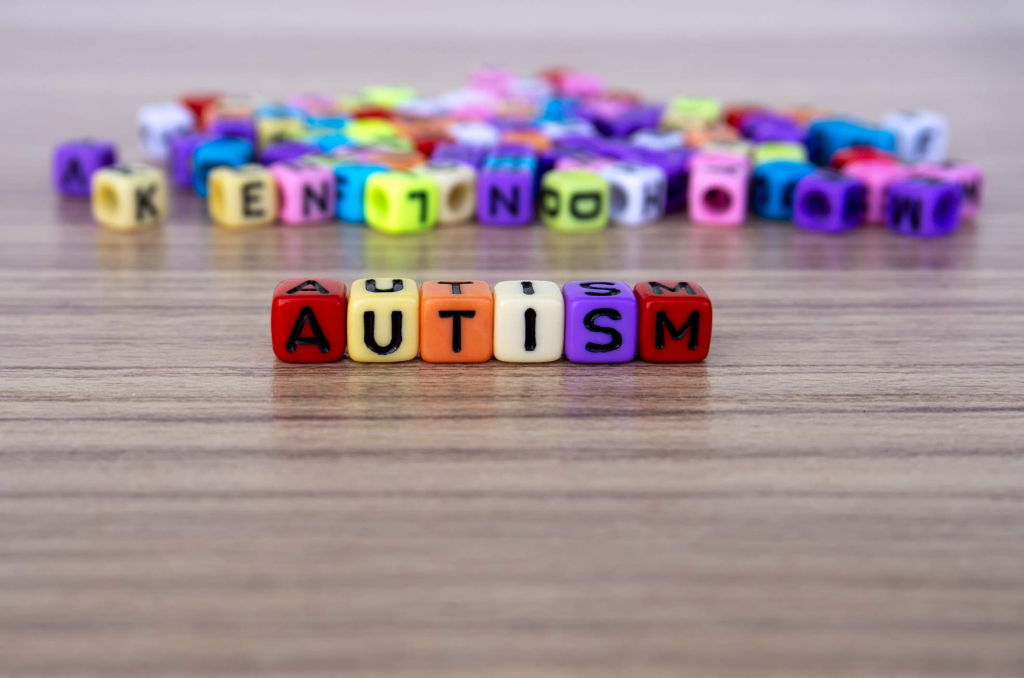
My Diagnosis of Autism
When I was younger, (I’m thirty two now) I didn’t have many friends. I had friends in my first primary school, Daniel and Zeke, yes that’s his name. I say I had friends, but I always felt not part of the friendship group. Two’s company and three’s a crowd as the saying goes. Zeke ended up moving to the other side of the country. I missed him immensely because I had to leave the school I was at due to my parents separating and subsequently divorcing. When I got to my new school – I was in year five, so the pupils had already their friendships. However despite this, on my first day, one lad, had an empty chair next to him and invited me to sit next to him. I will never forget that act of kindness. Unfortunately he’s no longer with us, but he isn’t forgotten by me. Other than that, I felt totally alone. Also when I first started, I was given the opportunity to go to Bournemouth for the week with school, now bear in mind, I had never been on a school trip outside the North West of England before! Also it was near to where Zeke had moved to, but I didn’t get to see him, oh how I wished to! I had a lot of obsessions at this time too, the colour red was and still is an obsession!
Going through secondary school was quite possibly one of the worst experiences I’ve had to face. I was bullied relentlessly for the five years I was there due to my incontinence issues. I felt totally alone as I didn’t have any friends. I kept going to school because I didn’t want to let them ‘win’ so to speak. I felt different to them and I certainly didn’t relate to them. I didn’t relate to anyone for that matter. I was really isolated because I didn’t and perhaps still don’t relate to my Mum and younger brother.
I then went onto college but ended up leaving for two reasons. The first reason was that I found love, I was with the girl for 9 years!! 9 whole years. I have a lot to be thankful for that relationship though our breakup was very acrimonious and we are no longer in contact, which is the way I want it – the way she left me will forever leave me with trust issues though I trust my now wife implicitly. She’s an amazing person and a hell of a lot stronger than I. I also left college to look after my Granddad who had Motor Neurone Disease. I miss him every day as he was my male role model, something I lacked and still lack with my own ‘Dad’.
Anyway I digress. Onto my journey to diagnosis of Autism. It all started when I had started a new job and an Occupational Health referral was made due to my mental health issues. I was going through my conditions and towards the end of the call, I made the remark that I couldn’t deal with any ambiguity and I see things as black and white as a spade is a spade, yeah?
I put this to my Care Coordinator who referred me to a charity called Action for ASD who specialise in diagnosis of Autism in adults. An appointment came through a few months later.
I went to the assessment place, where I undertook a preliminary test to see whether or not I showed signs of Autism and if so, a more thorough assessment would need to be undertaken.
Fast forward around six months – I had my thorough assessment, my wife and Mum came along with me. I was there for around 4 hours in total. I was assessed under the DISCO diagnostic criteria. At the end of the assessment, the psychologist told me that felt I was on the spectrum but she would have to do a report of everything that was discussed.
Fast forward around seven months, I finally got the report. The crux of it all – I AM on the spectrum. Everything made sense. My obsessions. My inability to deal with social situations, everything. It’s taken me a while to accept the diagnosis, the same with my Mum, but I’ve got there… just.
As a side note, in this time my care coordinator had changed – I had to complain about my previous one! My new one asked if I was medicated for Autism! Needless to say I was astounded.
Yes, I had a late diagnosis of Autism, age 31. It does not define me in anyway. I’ve been the same throughout my life and I’m damned sure I ain’t going to change now. My wife and I have a son, who we think is on the spectrum, I don’t want him to have no support like I did, he’s only four right now, so we want the support needed for him to grow and succeed where I didn’t get the chance to. I don’t blame myself if he does – it is what it is, we have to deal with the cards handed to us.
Everything happens for a reason…
Copy Right (C) St_Jimmy_77 (X)
Why I feel we need to start teaching about sexual assault as part of sex ed
They say some trauma survivors have some amount of amnesia. Unfortunately, I don’t think I’m one of them.
I remember many things I wish I could forget.
I also remember things I’m glad I can’t forget.
I was thinking about the first intimate relationship that I actually enjoyed. I was 14 and it was a consensual “we’re just screwing around” type of thing. At that age I had a very difficult time believing boys were capable of love so it was a chance I didn’t even want to take.
Then I thought about the experiences that came before him and why I don’t remember them so fondly and I came to realise it’s because the majority of them, at least half a dozen were not consensual. One was a clear cut rape, the others were me initially saying no then finally giving in to an incessant amount of pressure and persuasion. Many would still consider that rape…I’m not sure what to think. I often said “no,” rarely said, “yes.” It was more of a “well he’s obviously not listening so what else can I do?” thing and I’d just surrender to the pressure. It didn’t hit me till I was 41 years old that the half of dozen or so experiences before him were abusive mainly because they were usually one time situations and we never spoke again. The situations creeped me out enough to want nothing to do with the person who initiated them. So I just chalked it up to a bad experience. I couldn’t see clearly back then there was a complete disregard for my boundaries
If you had asked me before I came to his conclusion at 41 if I had ever been in an abusive situation I would have said, “Mostly just with my ex husband, one rape as teen, a couple as an adult.” But taking a long, close reflection back at those experiences, I wonder if perhaps it would be more accurate to say I was raped over half a dozen times as a teen.
Back to what I said earlier about believing boys were incapable of loving feelings, you may wonder how a 14 year old girl comes to such a conclusion. At that point in my life I really didn’t believe romance was possible. Sure I saw it on TV and I know a whole lot of what was on TV wasn’t real. Love wasn’t real in my mind because I never saw it growing up.
I was raised by a man who beat my mother. A man who lived with another woman during a portion of my youth. A man who was quite openly cheating on my mother often. My model of love was “Men get to do whatever they want while the woman stays home and suffers.” I was never the sort of kid to romanticise getting married. While my friends would be telling me what kind of man they’d marry, in precisely what profession, how many kids they would have and what their names would be, I’d respond with, “I’m never having kids and I’m never getting married.” From an early age I saw marriage as a trap.
So how did I end up married in an abusive situation? Well as time went on I did meet some nice guys who helped restore my faith in men. In my late teens/early 20’s I dated a guy who came from a very stable, intact family. For the first time in my life I saw an older couple who actually enjoyed each other’s company, a concept I had thought was purely fiction until that point in my life. Suddenly, it became something I believed for the first time in my life I could find.
That relationship didn’t work out in the long run as even though he was a nice guy over time I got a sense our views of the world were too different. He held very conservative views, mine are extremely liberal.
Next thing I know I think I have found the nicest man I ever could meet. He seemed caring, very funny and happy. We had a lot in common. I fell head over heels and I found myself agreeing to marriage in a time frame I would have considered unreasonably short only a year earlier. He was a narcissist and he was love bombing me. I fell for a total illusion.
Love bombing has a few different meanings, in this context it’s a technique used by narcissists to win the confidence of the victim. They shower the victim with adoration, affection and sometimes gifts. Then once they have got you under their spell they change. They aren’t the nice happy person you thought you fell in love with and you’re left wondering where that person went and how you can get them back because it seemed so real it’s hard to believe it was all only an act.
But I saw him “acting” time and time again. When we went out with my friends, even his friends the happy, funny person I thought I fell in love with came back. When we were home alone, it was a torturous hell of constant insults, put downs, tantrums and throwing stuff all around the room. One day after an outing with his own friends I asked him why this was. His response was, “Well, they wouldn’t like me if they knew how I really am.” Did it occur to you I might not like you if I knew how you really were? I suppose the answer is yes because why else would you use trickery to try to win someone over?
It felt as though I came to realise this way too late. I was already married. I was trapped. It’s not easy to walk away from the legal bond of marriage. Even harder when you come from an abusive family that only sees how much money he makes and could care less about your emotional well being. They’ve been enmeshed in an abusive dynamic their entire lives. In their minds you don’t walk away from a marriage due to unhappiness or abuse. You figure out how to live with it. Well, there was no way I could figure out how to live with it. It took time but slowly I found my way out.
This leads me to the most important thing I’ve learned from all these experiences. No one teaches you how to properly deal with an abusive situation when the people who are raising you are enmeshed in an abusive situation themselves.
As I’ve come to the realisation I have had many unwelcome life experiences with the opposite sex, I feel frustrated. Frustrated that how to recognise, deal with and prevent abuse is not a part of sexual education. Yes, I know it’s a scary topic. But we live in a world where many kids are growing up in abusive and dysfunctional households. If they aren’t going to learn how to deal with that stuff at home, we need to give kids another option, in case their parents fail them like mine failed me.
I wonder if these things had been a part of sex-ed, if perhaps I may have had a better chance of preventing or at least reducing the amount of unwanted experiences I had in my youth.
I went to Catholic School so unfortunately sex-ed consisted of “here’s how babies are made, if you have sex you could get STDs so don’t have sex till marriage.”
Let’s be very realistic here. How many kids do you think are going to listen to that advice? We need to give kids the tools to cope with these situations on the basis they are probably going to do what they want regardless of what we tell them anyhow. Kids are curious, they want to experiment, it’s a part of growing up but please can we find a way to arm them with the information and tools to recognise when a situation is just not right?
Sexual trauma is a very difficult experience. It changes you. It can make you blame yourself, hate yourself, want to hurt yourself and want to kill yourself. While I’ve been fortunate not to fall into addiction, that’s a fairly common means by which survivors chose to cope. I cannot stress the importance enough that we need to start early teaching kids, both boys and girls that these are important things to watch out for and that respecting other people’s boundaries as it pertains to sex is of the utmost importance in any relationship, so that we can increase the chances that at least some of these types of experiences may be prevented.
Copy Right (C) ptsdandillness (X)
Read This If You Feel Too Ashamed To Ask For Help
The stigma that hurts the most is the one we put on ourselves. All too often I hear my mentally ill peers shame themselves for their symptoms or treatments. When it feels as if the whole world is against us, it’s more important than ever that we take a stand for ourselves.
When a good friend of mine needed to seek inpatient treatment, they expressed it as if it was some personal failure on their part. I just didn’t see that as the case. To me my friend was ill and needed to get medical treatment. Would it be failure if it had been the flu? Or how about a broken bone?
I simply said that if you break your leg, you’ll need a cast and crutches. Now the choice is completely up to you, and you can certainly go without those, but how far are you going to get? And it’s probably only going to exacerbate the situation, as well as take far longer to heal.
What I see in my friend’s decision or any person’s decision to go inpatient for mental health treatment is pro activity about taking their well being into their own hands. Someone can faithfully take their medicine, regularly see a therapist and even attend support groups, but sometimes all of that just isn’t enough and we need a higher level of care. What’s the shame in that? Especially if said person recognised the depth of their symptoms before they got beyond the point of being able to make the decision themselves and took action. To me that shows a high level of self awareness, responsibility and a dedication to their recovery.
Now if someone is beyond the point of being able to make that decision for themselves, I still see no shame, because sometimes it’s hard to see what’s happening right in front of us as clearly as someone on the outside who knows us well can. And how fortunate are we in that case to have someone who cared enough to make sure we got the help we needed.
I have been inpatient for my mental health a total of five times, most recently February 2015. Three times it was not my decision, twice it was. It can be a bitter pill to swallow realising I do not have the capability to take care of myself. However, like any other medical condition out there, this is the entire point of medical professional and hospitals. They are there for a reason and a resource none of us should feel ashamed to use.
The road to recovery is not linear; someday I may end up back in the hospital. My level of wellness today may not be my level of wellness tomorrow. And that’s okay, I am at peace with this. Each day I will do the best I can in each way I can to move my recovery in a positive direction, and that most definitely includes inpatient hospital care should that be what I need at any given point.
I think the real danger in self stigma is if we end up shaming ourselves to the point of not getting the help we need. That would not only be harmful to ourselves, but potentially to those around us as well. A NAMI mentor of mine often says, “Having a mental illness is not our fault, but it is our responsibility.” So isn’t seeking the various levels of professional medical care up to and including inpatient treatment part of that responsibility? And to me being responsible for our recovery is not something to be shameful of, but rather proud. It is not easy to recognise you need help, seek out the help you need and openly receive that help once offered to you.
To my friend who felt shameful about needing inpatient care, look at the strength it took to make that difficult decision and how much better you are for having made it. TC mark
Copy Right (C) Laura Kaponer, January 7th 2019
X : LKaponer
It might be a CRAZY LIFE but ITS OUR LIFE!
I had been asked to write a piece on myself and my diagnosis and have received no reply if there’s spelling mistakes I do apologise. This is my first non poetry blog and probably my last all for one reason World Suicide Prevention Day.
I was diagnosed with C-PTSD a while ago. For anyone who doesn’t know what this diagnosis is or means I shall explain to you what it is and how it affects you. Most people with C-PTSD have (usually not always) been through childhood trauma usually sexual abuse or domestic abuse during early development and this carries through into adult life until you go through so much trauma in your life that eventually you just break. In my instance it was very early childhood abuse I won’t delve too far into that and the straw that broke the camel’s back was being mugged at knife point.
I actually told the person to kill me any way(because I didn’t feel like I deserved to live) but they merely wanted to rob me of my money and had no intention of using the knife. I can still see it to this day. I had been drinking and ended up somewhere I shouldn’t with a woman who had led me to an isolated area.
This was obviously a setup which they had done many times before but I don’t think they expected the reaction they got. I was that drunk she already had my phone I trusted her it was stupid looking back on it. When she led me into an alley and I seen a guy with a face mask on with his hood up I knew I had walked into a potentially fatal trap.
What really sobered me up was the blade, I remember it so clearly like it was yesterday the hilt was red and the blade was curved it was a switchblade kind of knife and by the way he was holding it he knew how to use it.
I had already attempted to commit suicide so many times so I wasn’t scared I wanted him to kill me at that point and told him to kill me if he wanted my money. I seen it as a gift that someone could do what I had failed so many times whether through suicide attempts or drugs and alcohol.
I told him to stab me in the heart and exactly where to aim for. I called him a coward I had previously as a younger lad(17) tried to kill myself by slitting my own throat so I know where the carotid artery is as the surgeon told me I was a millimetre from nicking it (and that would have been game over) so I knew where all my major arteries were too and told him to aim for my neck!
He took some swipes at me after asking me for my money. It was days before Christmas and I couldn’t afford to give my money away. I said to him that’s pathetic and showed him my neck and told him to cut here if he wanted to kill me.
Instead of swiping at me this time he stole the silver chain I was wearing which was sentimental to me. This made me calm down. I said look I’ll give you some money if you give me the chain back I don’t care about anything but the chain. So I went to get money out and he swiped my wallet and ran.
I screamed at him he was a coward and come back and finish the job. Obviously he never so yeah that’s the straw that broke the camel’s back but my problems are much deeper than that as I was told and knew anyway already.
I rang the police they didn’t come it was Christmas time and about 3 in the morning so I walked home kind of stunned. So the symptoms of my condition include
• Disassociation (Feeling detached from yourself)
• Derealisation (Feeling like things aren’t real)
• Depersonalisation (Not really knowing who you are)
• Extreme anxiety
• Suicidal thoughts
• Unwanted flashbacks from scents, places anything really
• Inability to concentrate
• Anger
• Frustration
• Bitterness (Why me)
• Physical aches and pains
• Suicide attempts
• Bitterness
• Many many more symptoms it’s hard to keep Track
Now I’m trying my best to recover I have been through stages of agoraphobia to the point of being scared of going in the shower multiple suicide attempts. I have nearly died 4 or 5 times through drug overdoses, once I hung myself and the belt snapped, when I was 17 I slit my own throat(as mentioned), jumped off bridges, I could go on. I have been sectioned under the mental health act for my own safety and all because of what happened when I was a child.
It’s stuck with me in every way. The way I act, my empathy, my intrinsic need to help other people even if I’m a complete mess myself.
Since the attack I have had EMDR therapy which didn’t work because I didn’t want to remember my childhood and was resistant to the therapy. My mind deals with things by forgetting about them even now. I guess that’s why I’m addicted to helping people. I’ve been addicted to alcohol and drugs, gambling, eating disorders you name it if it’s self destructive chances are I’ve done it and to the maximum.
I have many compulsions that just make no sense. I have to fill the hole I feel inside of me with something otherwise I don’t feel right at all. I don’t drink or smoke anymore and over the past year or so have been rebuilding myself and not just focusing solely on helping others and I have reaped the benefits personally in doing that.
I’m still much better at solving others problems than my own though but I now see all those times I survived suicide as a gift and I treasure every day of my life.
Tomorrow is never promised do not take life for granted. My mantra is if I can make just one person smile a day then that day has not been a failure. Without laughter in your life you will always remain in the dark and I don’t want to be in the dark anymore. My last suicide attempt was in April 2013 and I won’t be doing it again believe me.
Life is a gift don’t waste it and if you are in trouble always remember to have a support network that you trust. Make it as large as you can and you are welcome to lean on me if you need to I’ll be there if I can.
I think you have listened to me bang on enough by now about myself so I’ll stop there’s so much more to tell but I must wrap it up.
Never forget that you are worthy of life and sometimes life isn’t fair but sometimes we just have to be strong and think of the positives. You are a beautiful and unique human being don’t let anyone tell you any different.
I hope this helps someone at least just one person and I will be happy to have gone through writing it for you because it took a hell of a lot out of me to do so please What ever you do do not think suicide is the answer and if you don’t suffer from Depression don’t make light of someone’s suffering you never know they may just do something that you’ll never forget. Hindsight is a beautiful thing.
Have a lovely evening or day whenever you read this.
Copyright (C) poeticjustice23 (Twitter)
Letting the Diagnosis Sink In
One diagnosis didn’t convince me I had a mental illness. I cherry-picked which diagnoses I’d accepted as mine and discarded the others like spoiled fruit. The first time, I thought I’d had a spiritual revelation. The second time, I dismissed everyone around me as conspirators. The third time, the reports of my violent behaviour skimmed the surface of my mind, as if they were fantasy stories about someone else. The fourth time, when my behaviour threatened my employment at my dream job, I began to let it all sink in. It forced me to stop distorting the reflection in my mirror. I’d believed my mind was my greatest asset and strongest defence, but it had turned on me and become my most formidable opponent. Could I outwit my demon and return to robust mental health?
It Came Out of Nowhere
My first manic episode happened in 2007, but I had no useful knowledge of mental illness in order to understand what was happening to my mind. The attention from doctors and nurses was nothing more than a signal that I needed rest. Taking antidepressants was fine, as long as the condition was temporary. The professionals weren’t sure how long I’d need to take medication, and it all seemed perfectly logical since I’d endured the trauma of my father’s death. But I hadn’t endured. I’d collapsed. Without acceptance, I stayed collapsed.
The psychiatric staff gave me both physical and mental exercises to do to regain my functionality and I did them, temporarily. I went a couple years off medications before another manic episode overtook me. That time, I refused to acknowledge anything I’d said or done was off. My third manic episode let out rage but my conscious awareness was so sketchy that I didn’t know the full range of what I was doing or whom I was hurting. The aftermath scared me, but it was all so confusing. I couldn’t believe I was capable of such violence against a person I loved. Denial shielded me from feeling shame.
Acceptance One – I Needed Meds
Through it all, I journaled, determined to deepen my level of self-awareness. I also began seeing my medications as saviours. If I took them, I could stay out of the psychiatric ward. I accepted that my condition was not a series of one-offs, but that I had slipped through a one-way door, never to return to normal-without-meds again. That lasted for a couple years, until I was seduced by the futile hope that my meds were having no effect, and being without symptoms must have surely been proof that my meds no longer had a useful purpose. I was wrong.
The offer of work at a prestigious spa with a storied past was the manifestation of a dream that I had pursued for two years. I’d gone off my meds one August, started work in September, but by the end of December I was psychotic, loosely tethered to reality. It’s kind of like being a hot air balloon that has a hole. I float up dreamily while the pinprick yawns into a gaping hole, and I fall towards an inevitable crash. No amount of self-delusion can overcome gravity.
Final Acceptance
In the aftermath of that fateful day at Dream Job, the realisation spreading in my perception was that I needed to shoulder some burden of responsibility for my state of mind. I could no longer pretend Bipolar was a foreign language that I didn’t need to learn. I had to take charge of the totality of my health. If nothing else, I needed to be more involved in my own well being. The rivers of creativity and madness in my brain needed a valve regulator and that regulator was made of Risperdal and Cogentin.
While I believe my mental health practitioner needs to spend more time staying current and well-informed on the side effects of my prescriptions, I have my own access to the internet, and I’m not bad at vetting sources for reliability. I’m now on low dose Abilify and don’t take normalcy for granted.
In the midst of it all, I’ve had to admit I have a voice and a good command of the English language, so I have no excuse for not writing it out. With my meds as one link in my armour, I can face the daily challenges of life and regain trust in my mind and perceptions and senses. By taking my journey online, I’ve connected to a worldwide tribe who share their trials and strengths. I’ve opened up to my cousin, who’s a good writer. She’s always wanted to write a book and my life was “great source material”.
The next links I’ll add to my armour are nutrition conducive to healthy mental states and daily exercise. I plan to become formidable.
By “Anonymous”
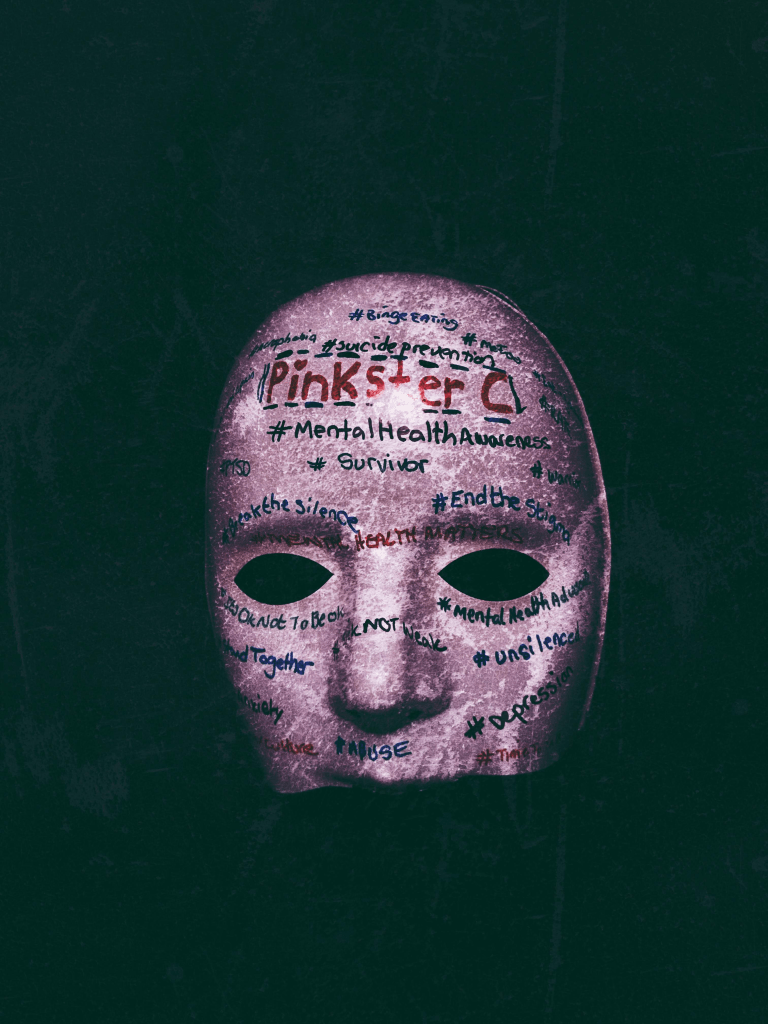
Who am I..? I’m a survivor!!
Who am I you may ask? I’m a survivor! A survivor of what you may also ask? A survivor of rape, physical and emotional abuse, domestic violence, eating disorders and my own mental health. I openly suffer with CPTSD, Agoraphobia, Depression, Anxiety as well as social anxiety; Binge/Bulimia eating disorders, OCD,panic attacks as well as having a chronic illness.
I get asked a lot how I hold my head up after going through so much in my life… the truth is I sometimes can answer that with “because I want to make a difference” or with “because I’m a survivor not a victim” and other times I just smile because I often ask myself the very same question. I used to think if you had to be anyone, you had to be the smiley perfect version of yourself that others wanted, at the time they wanted it.. but the truth is with this only came exhaustion, despair and giving others a huge amount of control over my own life. For years I lived like this, falling into others traps, collecting mental health issues along the journey which I would then be judged for by the same people who helped create them.
Over the many years of different traumas I experienced (which I will go into in more detail in different blogs I create), I learnt to create specific masks for specific people and situations. For years I was convinced this was working and I would push a side the traumas I went through and the abuse I experienced as if they was normal… but on one cold dark night my life was to change and was about to be thrown into a turmoil of which I could no longer ignore this.. This was the night I was raped!!
Since this devastating night I have gone through things you should never have to experience in any life time (but this is for another blog, another time) and due to thankfully, a team and a charity who helped support me in my time of destruction and need, I went through two years of extensive therapy which took a girl of many broken pieces and many broken heartaches in her life and managed to help open my eyes to the fact that yes I am a survivor but most importantly I am me!! And that being me,is okay.
I have messy hair, I’m not a perfect body size, I’m not always positive, I do have my breakdowns/Dips in my mental health, I do have my own issues, I am allowed to express my own feelings without guilt… because #ItsOkNotToBeOk because it’s ok to be who I want to be… because without me there isn’t anything Left but a masked robot…So now when you ask me who I am.. and how I hold my head up?
I will simply reply… I am a survivor…. and I am my very own unique version of me!
Copyright (C) 2019 Pinkster 14/01/2019
 PinkstersAwareness